Rubik’s Cube Algorithms 3x3: The Beginner Solution Formula Sheet
Every Rubik’s cube algorithm a beginner needs on one sheet: the 3x3 solution formula for each step, from white corners to the yellow cross and last layer.
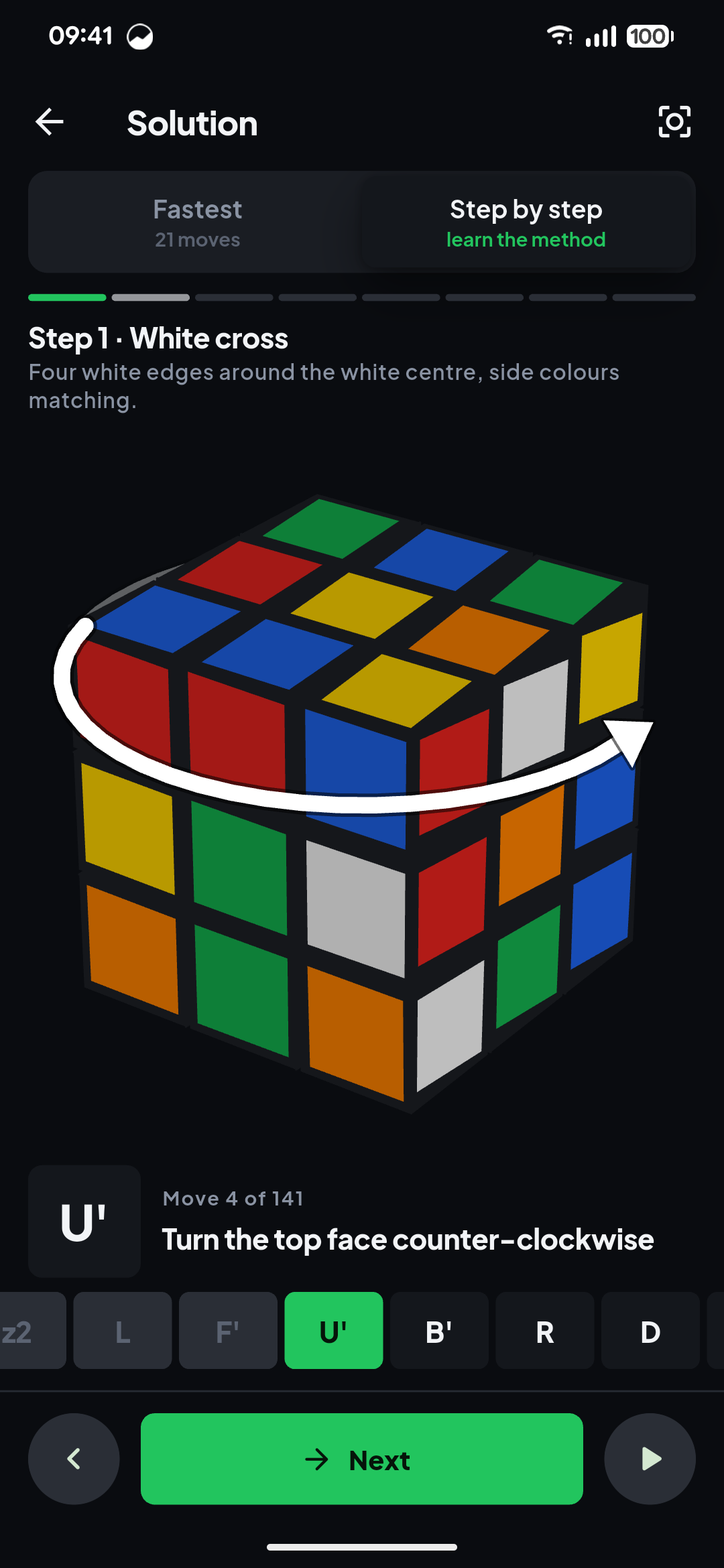
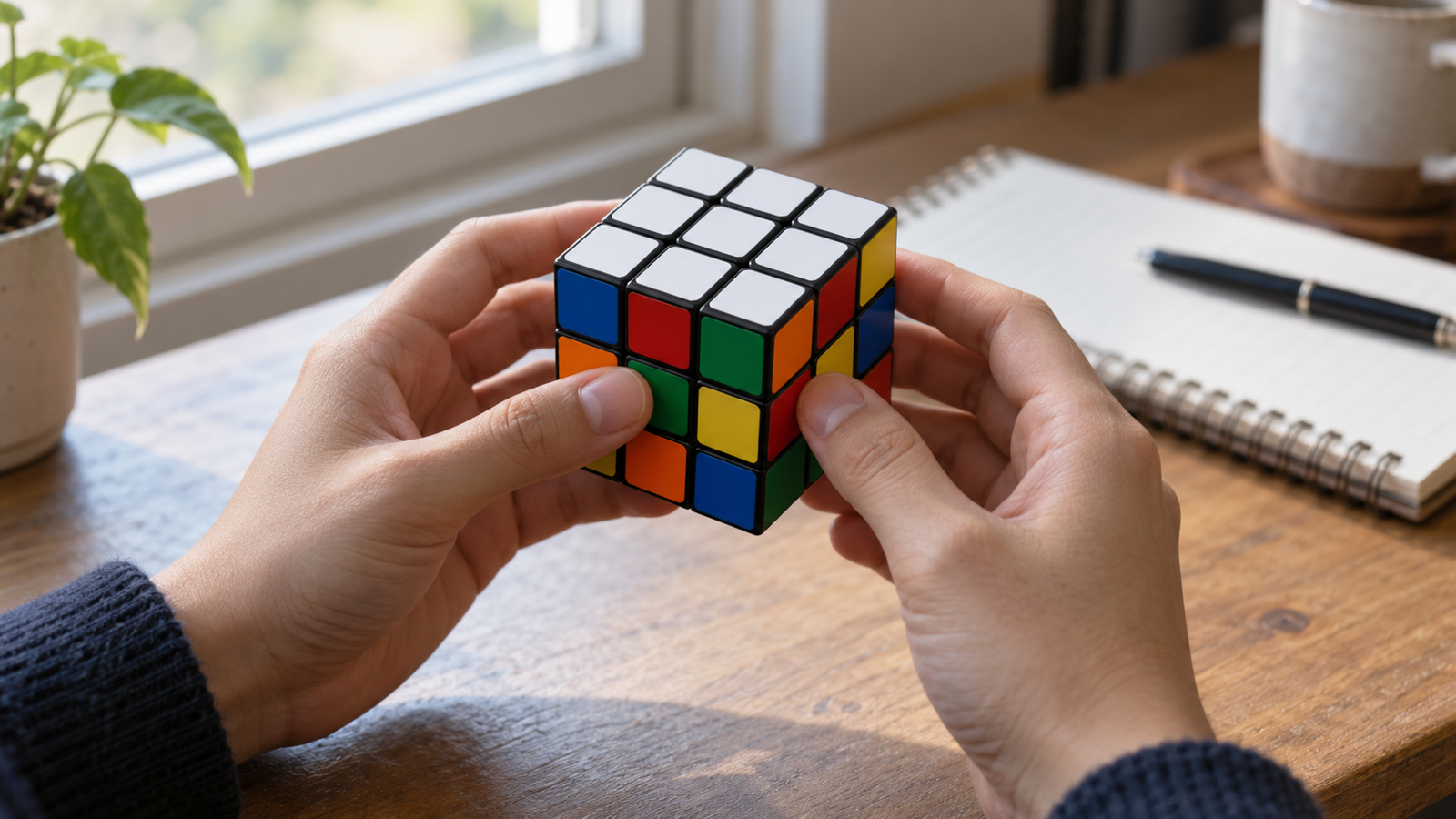
A Rubik’s cube algorithm is a fixed sequence of turns that moves a few pieces and leaves the rest of the cube where it was. You don’t need hundreds of them. The beginner method solves any 3x3 with seven short formulas, and this page is the sheet: every algorithm, what it does, and when to use it.
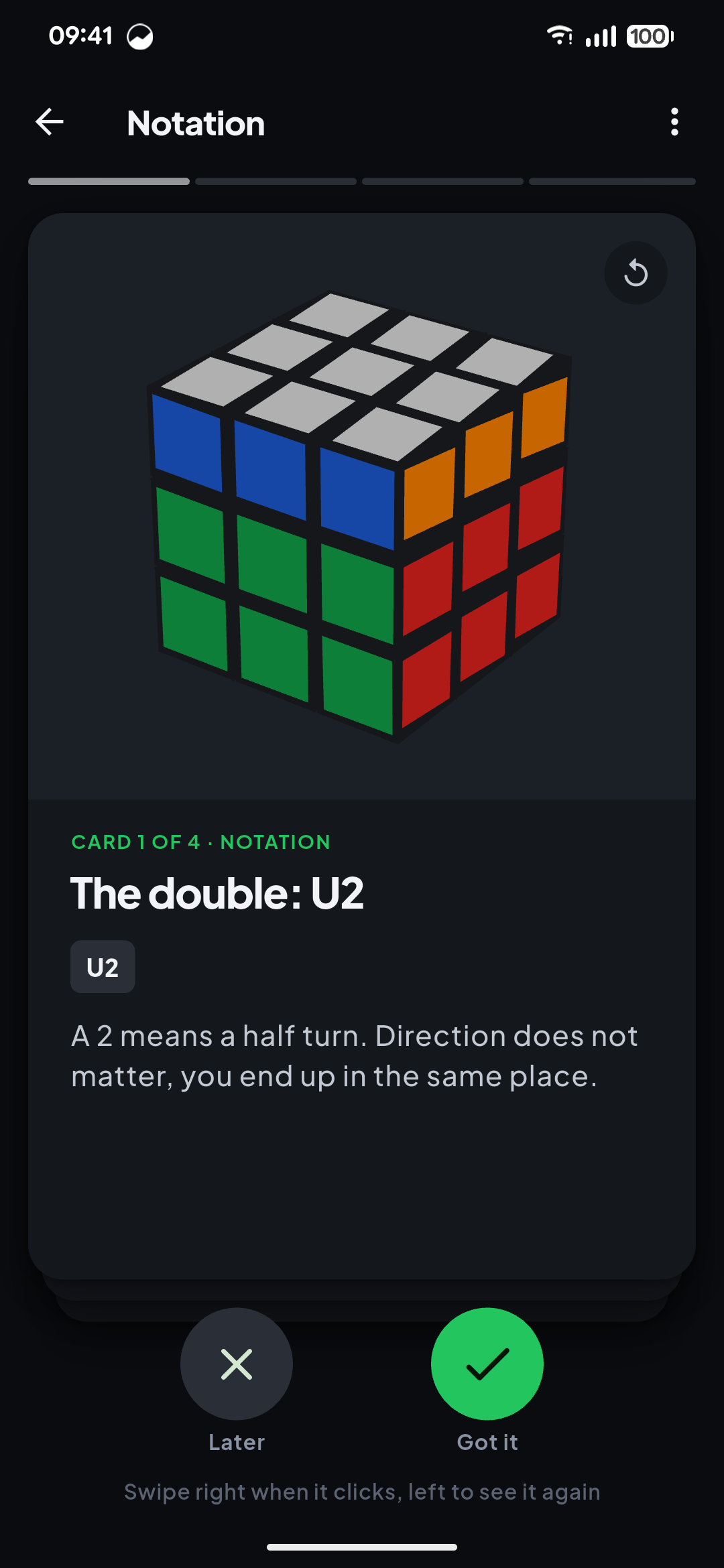
If the letters are new to you, read Rubik’s cube notation explained first. It takes ten minutes. For the full walk-through with pictures of each stage, see how to solve a Rubik’s cube.
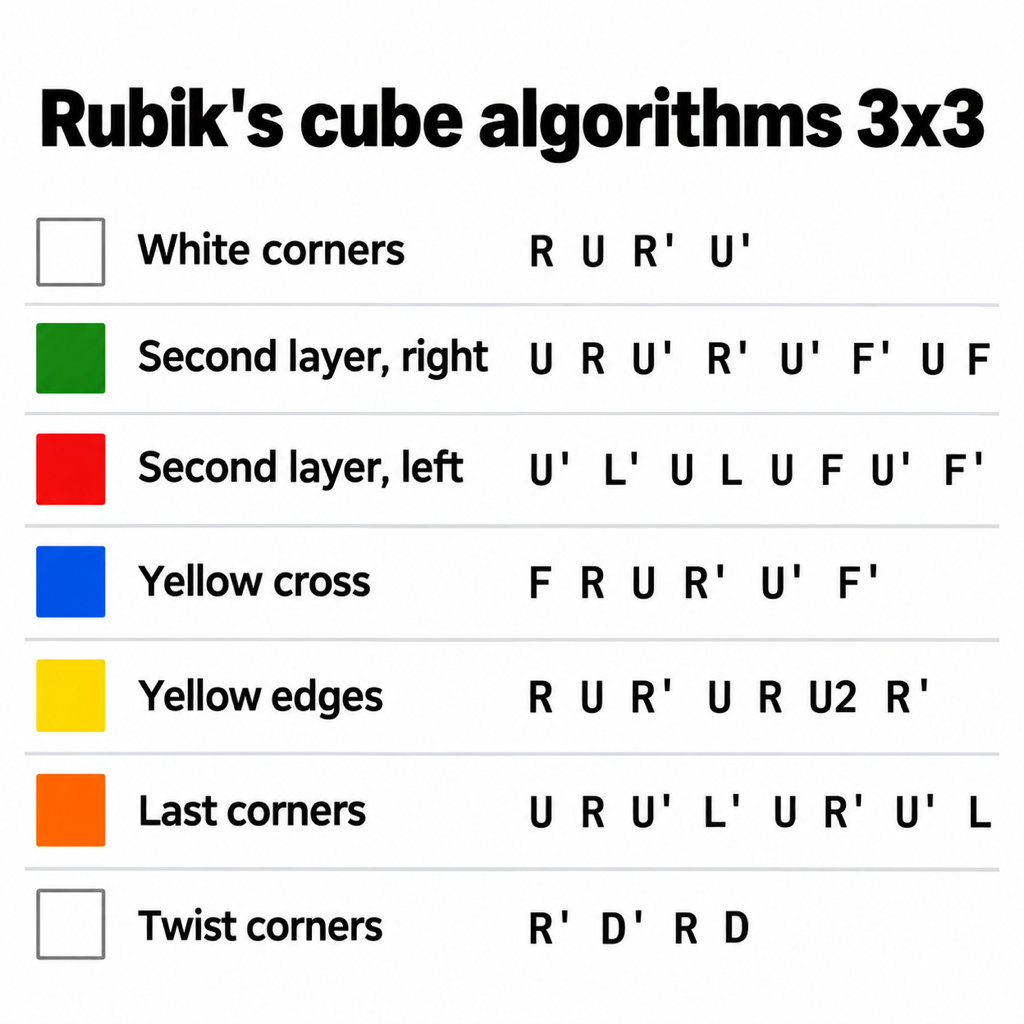
The Rubik’s cube solution formula, step by step
Hold the cube with the finished part at the bottom from step 2 onwards, and never rotate it in your hands mid-algorithm. Here is every formula in the order you use it.
Step 1: White cross (no algorithm)
Bring the four white edges up round the yellow centre to make a “daisy”, then turn each one down to the white centre once its side colour matches the centre below it. This is solved by feel; there is nothing to memorise.
Step 2: White corners — R U R' U'
Put a white corner in the top layer, directly above where it belongs, and hold it at the front right. Repeat R U R' U' until it drops in with white facing down: one, three or five times depending on how it’s twisted.
Step 3: Second layer — U R U' R' U' F' U F and U' L' U L U F U' F'
Find a top-layer edge with no yellow on it. Turn the top until its front colour matches the centre below it. If its top colour matches the right centre, run U R U' R' U' F' U F. If it matches the left, run the mirror, U' L' U L U F U' F'. That is the whole “Rubik’s cube 2nd layer algorithm”.
Step 4: Yellow cross — F R U R' U' F'
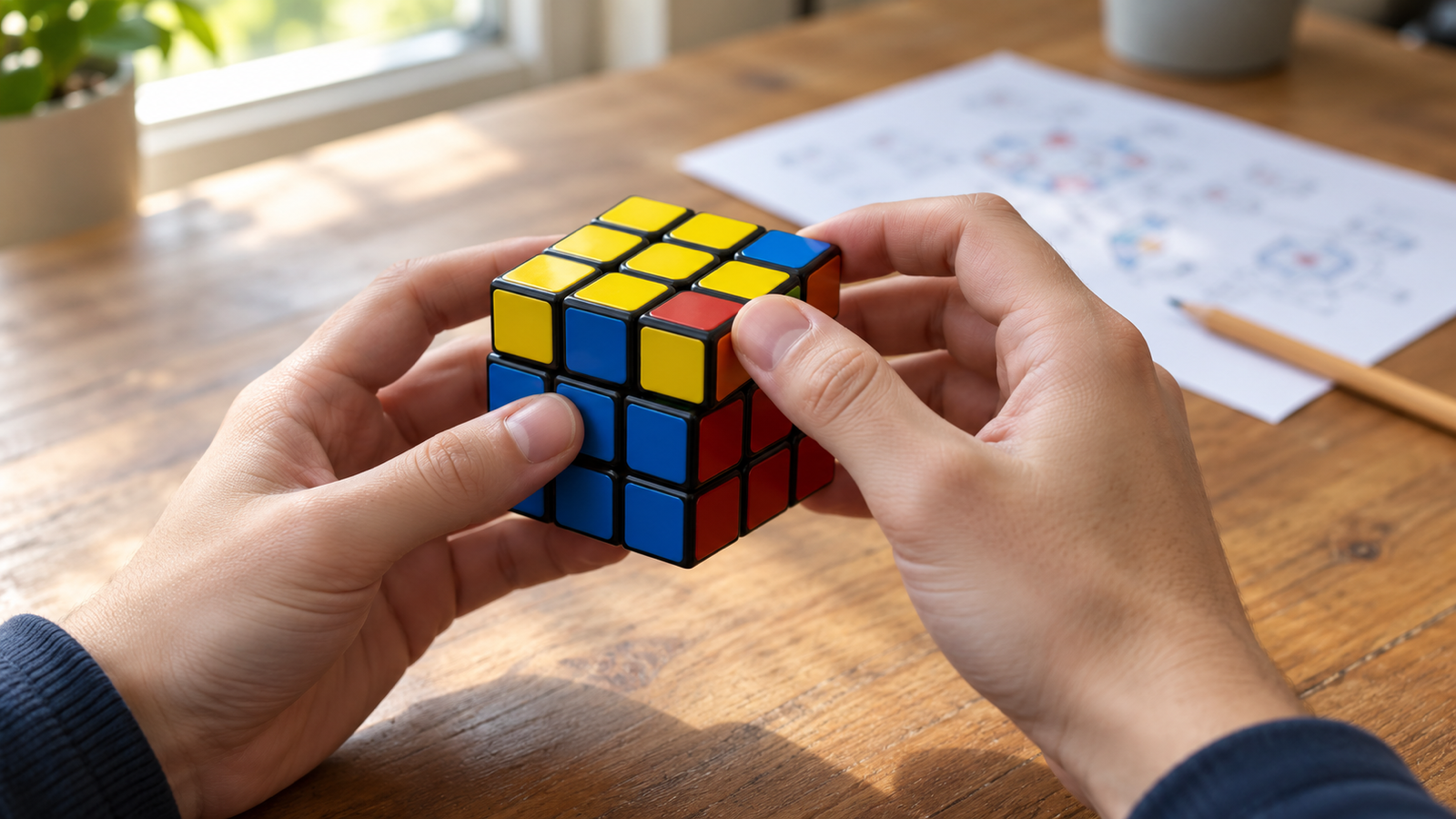
Look at the yellow top. You’ll see a dot, an L shape, a line or a finished cross. Hold an L at the back left, or a line running left to right, and run F R U R' U' F'. Dot goes to L, L goes to line, line goes to cross.
Step 5: Yellow edges — R U R' U R U2 R'
Turn the top until two yellow edges match their side centres. If they are next to each other, hold them at the back and left and run R U R' U R U2 R'. If they are opposite, run it once from anywhere and try again.
Step 6: Place the last corners — U R U' L' U R' U' L
Find a yellow corner that is in the right place, even if it is twisted. Hold it at the front right and run U R U' L' U R' U' L until all four corners are in their places. If none is, run it once from anywhere first.
Step 7: Twist the last corners — R' D' R D
Hold the cube with yellow on top and an unsolved corner at the front right. Repeat R' D' R D until its yellow faces up (two or four times), then turn only the top layer to bring the next unsolved corner to the front right and repeat. The lower layers look scrambled halfway through; that is normal, and they come back when the last corner is done.
The Rubik’s cube last layer algorithms
Steps 4 to 7 are the last layer. People search for them separately because that is where most first solves get stuck. In short:
- Yellow cross: F R U R' U' F'
- Yellow edges: R U R' U R U2 R'
- Corner positions: U R U' L' U R' U' L
- Corner twists: R' D' R D
Why these formulas work
Every algorithm on the sheet does one small job and then undoes its own mess. R U R' U', for example, moves a corner and two edges and puts everything else back, which is why repeating it six times returns a solved cube to solved. That is also why accuracy matters more than speed: an algorithm done 90 percent right doesn’t do 90 percent of the job. It scrambles the cube.
After the beginner method: how many algorithms are there?
The popular speed method, CFOP, finishes the last layer in two looks instead of four, using 57 OLL algorithms (orient the last layer) and 21 PLL algorithms (permute it). Most people learn them slowly, over months, starting with the “2-look” subset of about ten. You don’t need any of them to solve the cube; they only make it faster.
Rubik’s cube algorithms for 2x2
A 2x2 is just the corners of a 3x3, so the corner steps from this sheet solve it: make one face with R U R' U', then use U R U' L' U R' U' L to place the last four corners and R' D' R D to twist them. There are no edges or centres to worry about.
Common questions
What is the algorithm for solving a Rubik’s cube?
There isn’t one single algorithm. A solve is a series of short ones. The beginner method uses seven: R U R' U', the two second-layer sequences, F R U R' U' F', R U R' U R U2 R', U R U' L' U R' U' L and R' D' R D.
What is the easiest Rubik’s cube solution formula?
The layer-by-layer beginner method on this page. Its longest formula is eight moves, and most people finish their first solve within a couple of hours.
What is the yellow cross algorithm?
F R U R' U' F'. Hold an L shape at the back left or a line horizontally, then run it. From a single dot, run it once to get an L first.
How many algorithms do you need to solve a Rubik’s cube?
Seven with the beginner method, and you can get by with fewer if you learn the mirrors. Speedcubers use 78 or more for the last layer alone, but that is about speed, not about solving it.
What if I get lost halfway through?
Scan the cube into a solver and it will tell you exactly where you are. Cube Solver: Scan & Solve 3D can show the solution the beginner way, stage by stage, using these same algorithms, so you can pick up from wherever you stopped. If it says the cube is invalid, see what “Invalid Scramble” means.
The short version
Seven formulas solve a 3x3: R U R' U' for the white corners, U R U' R' U' F' U F and its mirror for the middle layer, then F R U R' U' F', R U R' U R U2 R', U R U' L' U R' U' L and R' D' R D for the last layer. Screenshot the sheet above, and practise one step at a time.
From the studio
Previous Article
Games to Play Over the Phone: 25 Fun Games for Friends and Couples
Next Article
How to Sign Documents on Android Phone (Free): PDF, Word and Paper