Speedometer Not Working? Causes, Fixes and How to Drive Safely Meanwhile
Speedometer not working? The usual causes (fuse, speed sensor, wiring, cable, cluster), what to check yourself, repair costs, and a GPS backup until it is fixed.
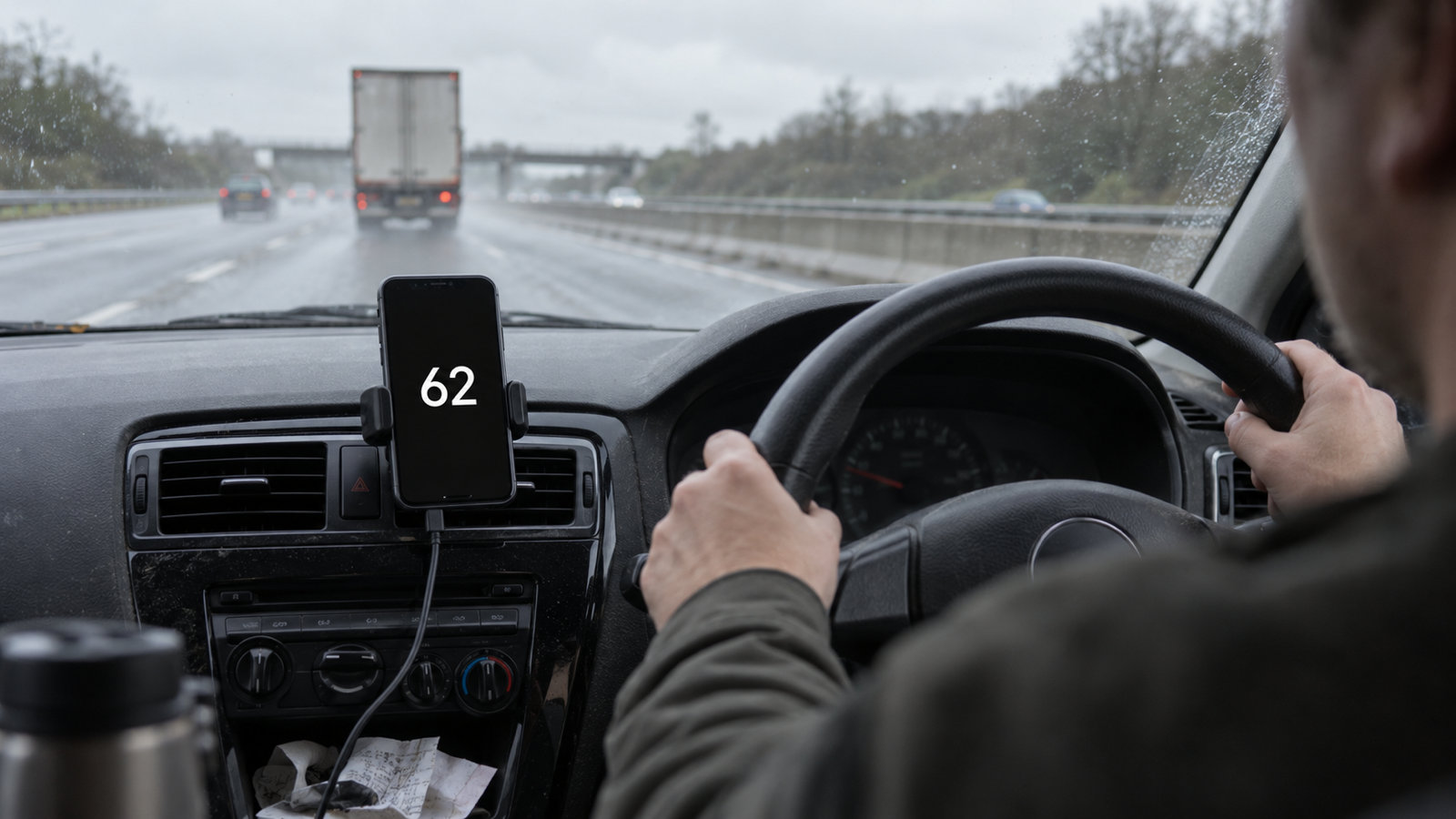
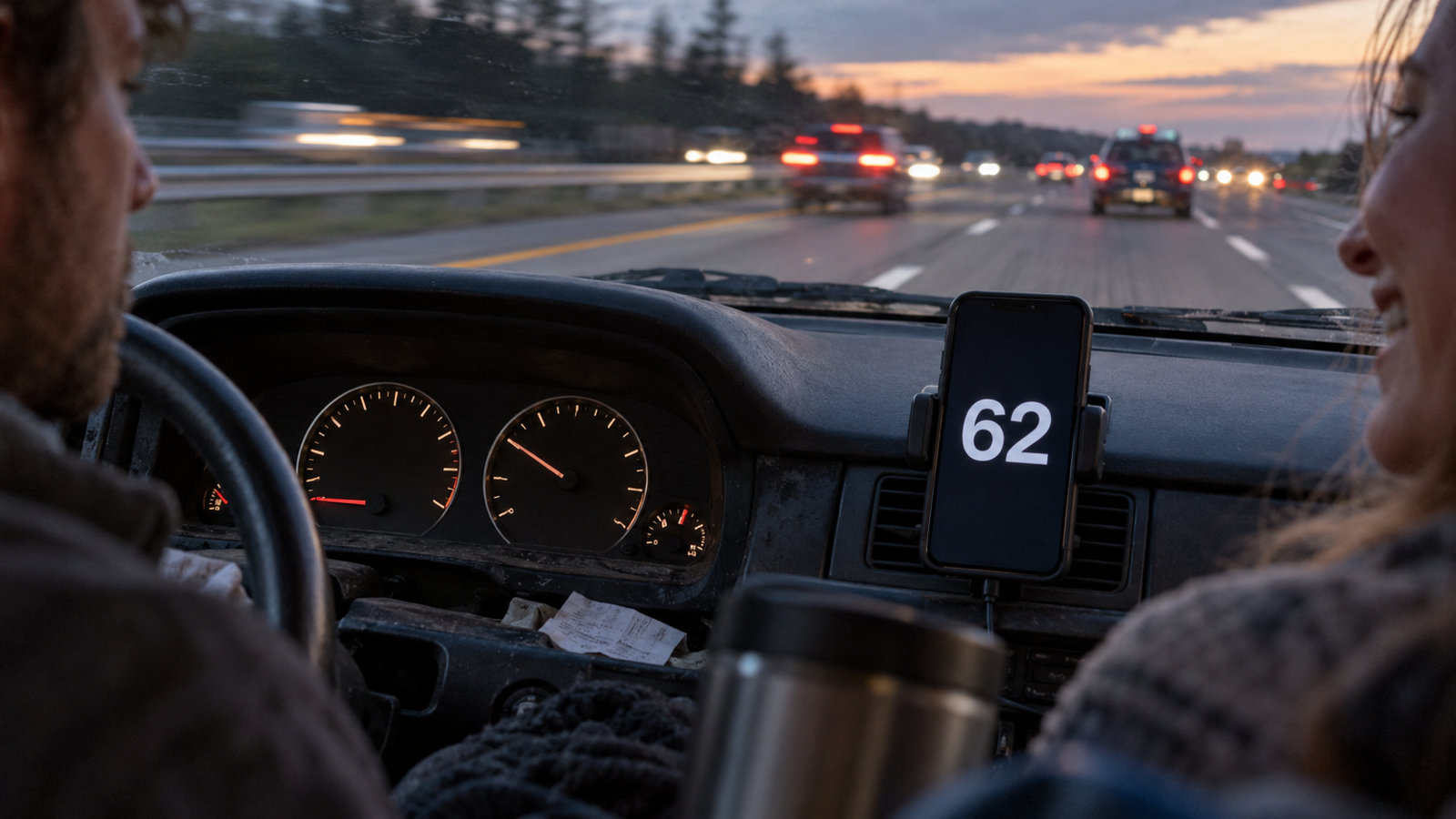
A speedometer that stops working is most often caused by a failed vehicle speed sensor (VSS), a blown fuse, or a damaged wire or connector between the sensor and the dashboard. On older cars with a mechanical gauge, a snapped speedometer cable is the usual suspect, and on any car the instrument cluster itself (its stepper motor or circuit board) can fail. Start with the fuse, because it's free to check. Until it's repaired, you can still drive at a legal speed by using a GPS speedometer on your phone, mounted on the dash.
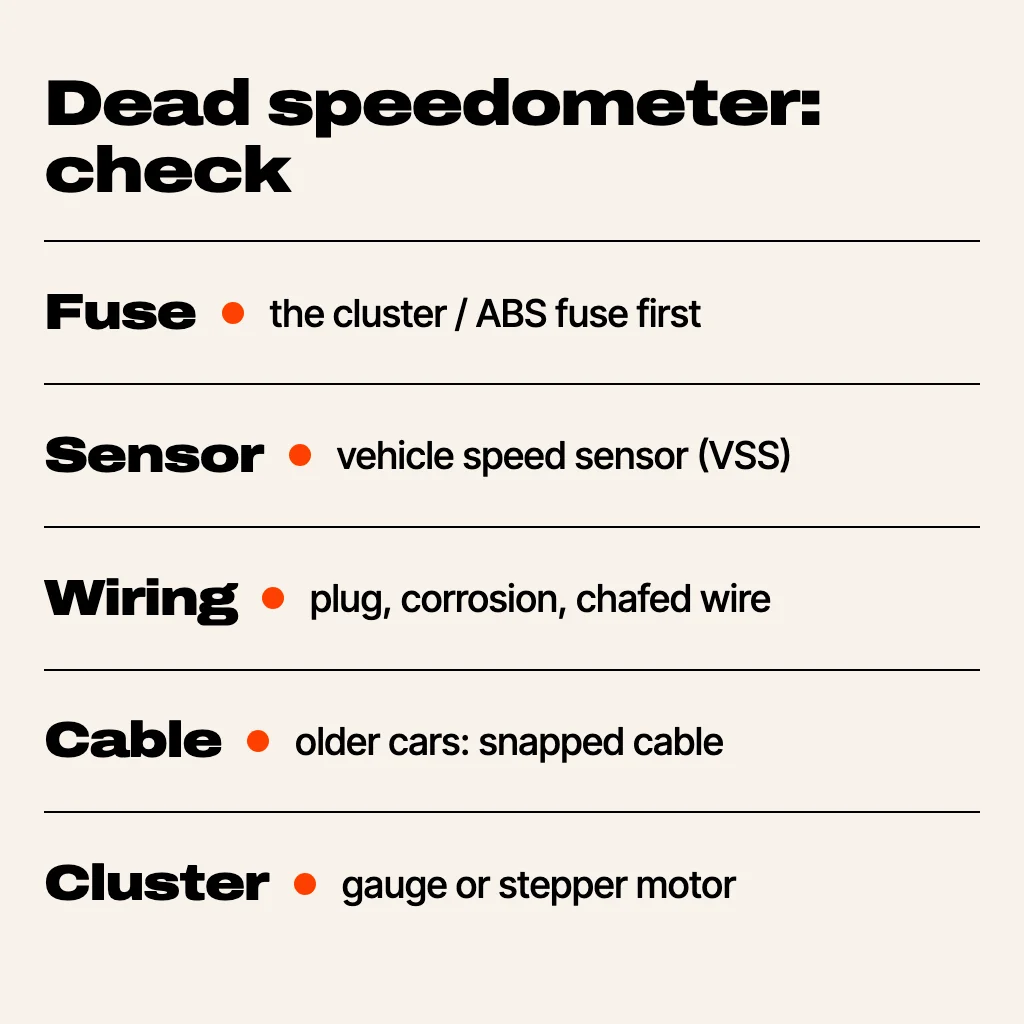
Why is my speedometer not working?
Modern cars don't measure speed at the dashboard. A sensor on the transmission or a wheel hub sends pulses to the engine computer (ECU) or ABS module, which passes a speed signal to the instrument cluster. A break anywhere in that chain kills the needle. The common causes, from most to least likely:
| Cause | Typical signs | Rough repair cost (US) |
|---|---|---|
| Vehicle speed sensor (VSS) | Needle dead or jumpy, check engine light, harsh or late automatic gear changes, cruise control stops working | $100–$350 |
| ABS wheel speed sensor | ABS or traction light on together with a dead speedometer (on cars that read speed from the ABS) | $150–$400 |
| Blown fuse | Speedometer and other gauges or lights out at the same time | Under $10 |
| Wiring or connector | Works on and off, fails after rain, a car wash or a bump | $50–$300 |
| Speedometer cable (older cars) | Needle dead or wobbling, odometer also stopped, ticking noise behind the dash | $100–$250 |
| Instrument cluster | Needle stuck while the trip computer or your phone shows speed; other gauges flicker | $200–$1,000+ |
| ECU or software | Several warning lights at once, poor running; sometimes after a battery change | Varies widely |
Costs are typical independent-shop ranges and vary a lot by car and country; get a quote with diagnosis included.
What to check yourself first
- Look at the dashboard lights. Check engine, ABS or traction control lights alongside a dead speedometer point straight at a sensor. A code reader (about $20, or free at many parts stores) will usually show a VSS or wheel speed sensor code.
- Check the fuse. Your owner's manual shows which fuse powers the instrument cluster (often labelled METER, GAUGE, CLUSTER or IP). A blown fuse has a broken metal strip inside. If a new one blows again quickly, there's a short and it needs a mechanic.
- Ask: does the odometer still count? If the speedometer is dead but the odometer and trip counter still add miles, the speed signal is arriving and the fault is probably the gauge or cluster. If both stopped, the problem is upstream: sensor, wiring or cable.
- Think about what changed. A battery change or jump start can make some clusters lose their calibration until the ECU relearns or is reset. Gearbox work, a clutch replacement or new wheels can mean a sensor plug was left loose or the wrong tyre size was fitted.
- Inspect the sensor plug. If you can see the speed sensor (on the transmission housing on many cars), check that the connector is clipped in, dry and free of green corrosion.
Speedometer not working after a battery change or jump start
This is one of the most searched versions of the problem. A voltage spike or a sudden loss of power can confuse the cluster or ECU. Try this first: switch the ignition off, wait 10 minutes, start the car and drive a few minutes. If that doesn't work, check the cluster fuse (a jump start can blow it) and make sure both battery terminals are tight and clean. If the needle is still dead, a scan tool can clear stored codes; some cars need a dealer reset.
Speedometer not showing the correct speed
A needle that works but reads wrong is a different problem. Larger or smaller tyres than the factory size will skew it: bigger tyres make the car go faster than the needle shows. Most speedometers are also built to read slightly high on purpose (EU rules forbid them from ever showing less than your true speed). If yours reads low, or more than about 10% high, have it checked. A phone GPS reading at a steady speed on a straight, open road is a good way to measure the error; our guide on how accurate a GPS speedometer is explains when to trust it.
Is it illegal to drive with a broken speedometer?
In most places a working speedometer is part of roadworthiness: the car can fail its safety inspection or MOT, and in some states and countries you can be stopped for it. The bigger risk is speeding without knowing it. Get it fixed soon, and until then use a reliable backup and keep to the flow of traffic.
How to drive safely until it's fixed
Your phone can stand in for the dashboard. GPS measures speed from your position many times a second, and at a steady speed under open sky it's usually within 1–2 km/h of your true speed, often closer than the car's own needle. Two ways to set it up:
- Google Maps (Android): turn on Speedometer in Navigation settings. It shows your speed while you're navigating to a destination.
- A GPS speedometer app: shows speed full-screen without a destination and can warn you when you pass a limit you set. Our step-by-step guide to using your phone as a speedometer covers mounting and settings.
Mount the phone low on the dash or in a vent; never hold it while driving. Expect a short lag after sharp acceleration and no signal in tunnels.
GPS Speedometer: a backup on your dashboard
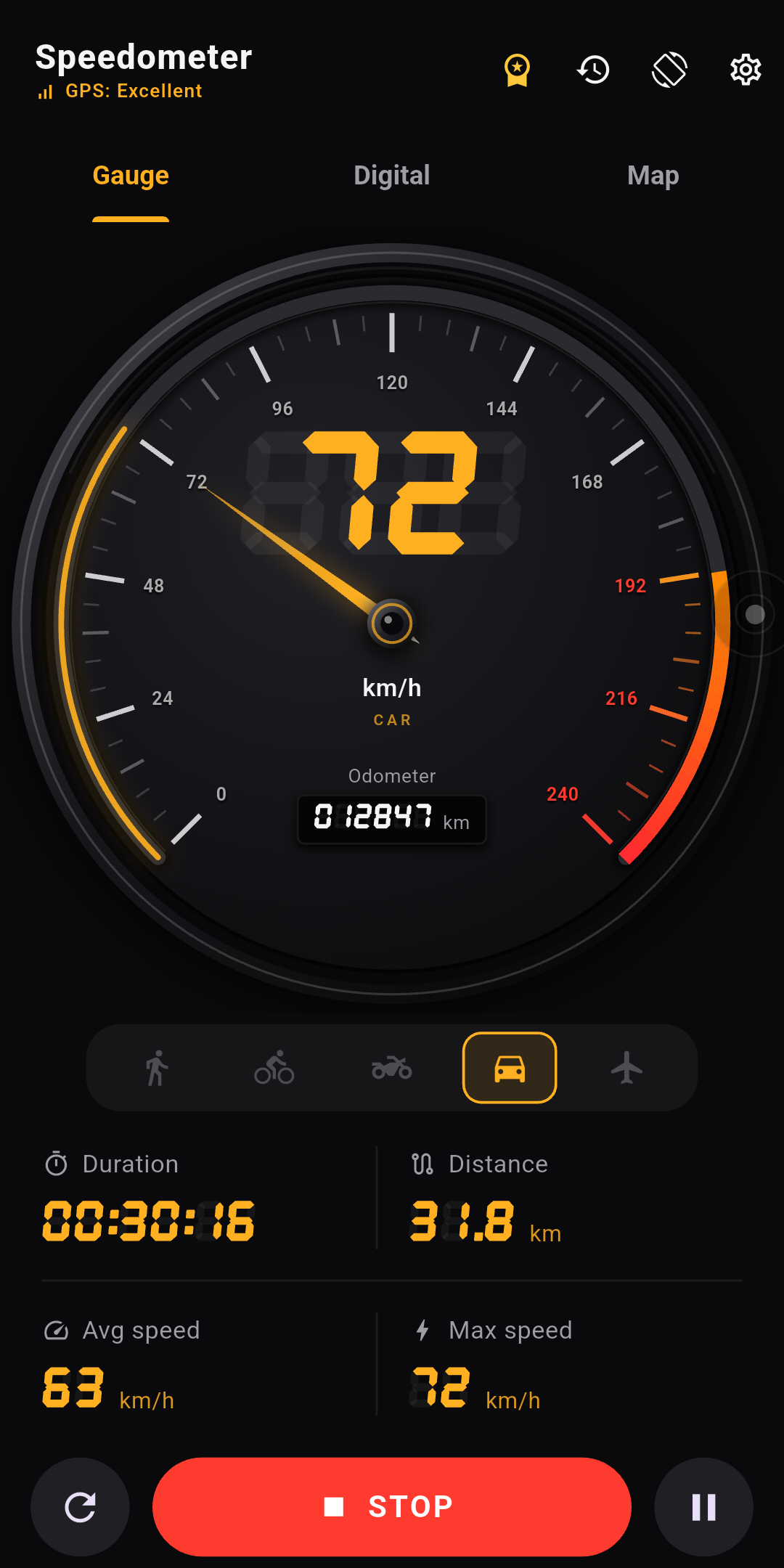
GPS Speedometer: Trip Tracker is our Android app for exactly this. It shows an analog gauge, a large digital readout or a live map, in km/h or mph, with no account and no internet needed for the speed reading. Set a speed-limit alarm for your car and it warns you when you go over, so you don't have to keep glancing at the number. Free covers the gauge, the readout, the map, speed alerts, four vehicle modes and unlimited trip recording with your three most recent trips. Pro, a one-time purchase, unlocks the full trip history, all dashboard colours and a mirrored HUD you can reflect off the windshield at night.
Common questions
What is the most common cause of a speedometer not working?
A failed vehicle speed sensor, followed by a blown fuse and damaged wiring. On older cars with a mechanical gauge, a broken speedometer cable.
Can I drive my car if the speedometer is not working?
The car will usually drive normally, but you risk speeding and failing inspection. Use a phone GPS speedometer as a temporary backup and book a repair.
Why does my speedometer not work but my odometer does?
The speed signal is reaching the dashboard, so the fault is most likely the gauge, its stepper motor or the instrument cluster.
How much does it cost to fix a speedometer?
From under $10 for a fuse to $100–$350 for a speed sensor, and several hundred dollars or more if the instrument cluster needs repair or replacement.
Will a bad speed sensor affect the transmission?
Often, yes. Automatic gearboxes use the speed signal to choose gears, so a failed sensor can cause late or harsh shifts and disable cruise control.
From the studio
Previous Article
What to Do When You Feel Lonely: Small Steps for Tonight and This Week
Next Article
Best Apps for Couples: 10 Picks by What You Actually Need