How to Relieve Neck Tension from Stress (5-Minute Routine)
Stress tightens the neck and shoulders without you noticing. A five-minute routine to release it: breathing, three stretches, heat or gentle vibration.
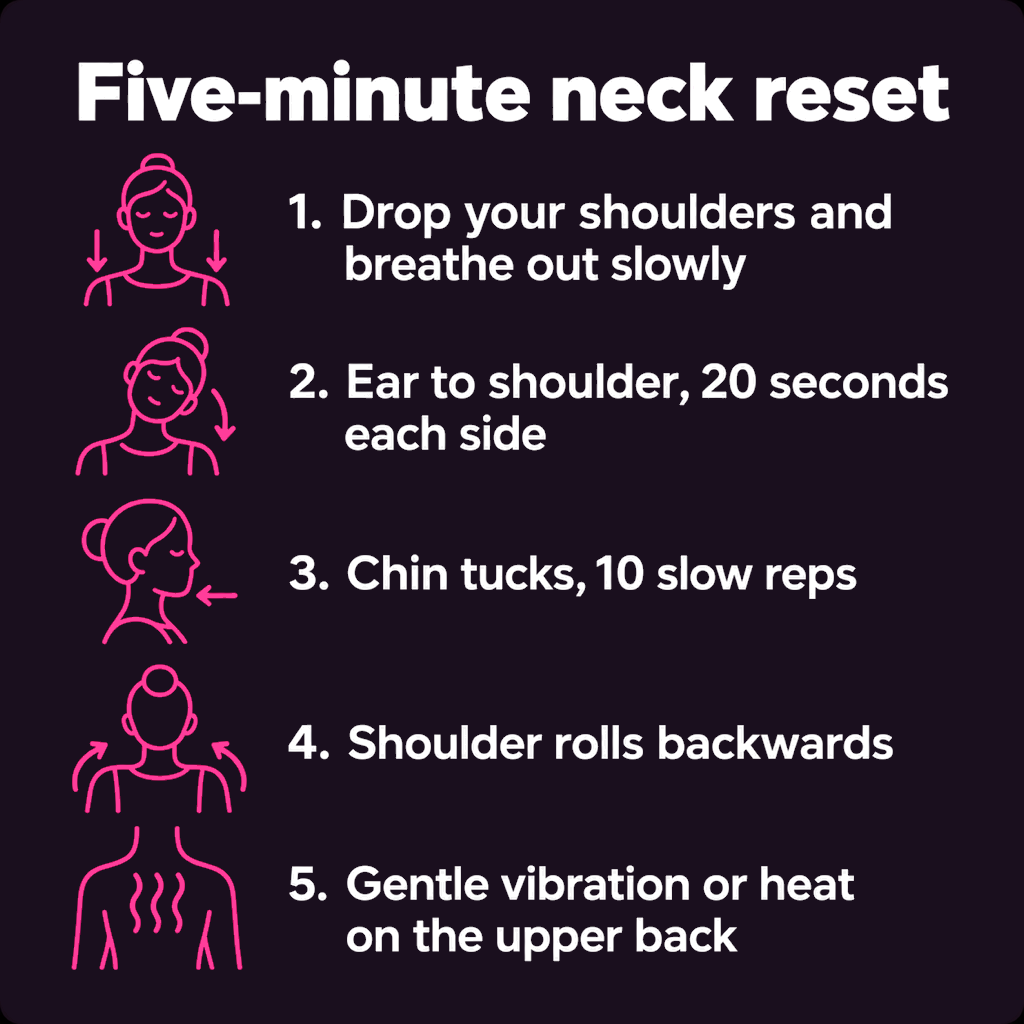
To relieve neck tension from stress, first let your shoulders drop and breathe out slowly, then do three gentle stretches (ear to shoulder, chin tucks and shoulder rolls), and finish with warmth or light massage on the upper back. The whole routine takes about five minutes. Do it a few times a day and the tension stops building up, rather than you only noticing it at night.
Why stress lands in your neck
When you are stressed, your body braces. The muscles that lift the shoulders and hold the head (the upper trapezius and the small muscles at the base of the skull) tighten slightly and stay that way. Add hours leaning towards a laptop or phone, and those muscles are holding your head forward all day. Nothing is injured; the muscles are simply never told to let go. Most of this routine is about giving them that signal.
The five-minute neck reset
1. Drop and breathe (1 minute)
Sit upright, let your shoulders fall away from your ears, and unclench your jaw. Breathe in through your nose for four counts and out through your mouth for six. A longer out-breath is one of the simplest ways to calm the stress response, and you will often feel your shoulders sink a little further on each breath.
2. Ear to shoulder (1 minute)
Tilt your head so your right ear moves towards your right shoulder, without lifting the shoulder. Hold for 20 seconds, breathing slowly, then switch sides. For a little more stretch, let the opposite hand rest on your thigh or hold the seat.
3. Chin tucks (1 minute)
Looking straight ahead, glide your chin straight back, as if making a double chin, then release. Ten slow repetitions. This undoes the head-forward posture of screen work and wakes up the deep neck muscles that are meant to do the holding.
4. Shoulder rolls (30 seconds)
Lift your shoulders towards your ears, roll them back and down, and let them drop. Ten slow circles backwards.
5. Warmth or gentle vibration (1 to 2 minutes)
Finish with something that helps the muscles stay relaxed:
- Heat: a warm shower on the neck, or a warm (not hot) heat pack across the shoulders for 10 to 15 minutes in the evening.
- Self-massage: with your fingertips, make small slow circles on the muscle between your neck and shoulder, then along the base of the skull. Firm but comfortable.
- Gentle vibration: rest a vibrating phone or massager on the top of the shoulder or the upper back for a minute per side. Keep it on muscle, not on the front of the neck or directly on the spine.
Using your phone as a mini massager
A phone's vibration is light, but on a tense shoulder at the end of a long day it is a pleasant way to switch off, especially paired with slow breathing. Vibrator: Massage & Relax is our app for this: slow patterns like Calm and Breathe swell softly and are free; deeper rhythms like Knead and Roller come with Full Access. Add the ocean or rain soundscape, set the 5-minute timer, and it fades out on its own. Lay the phone flat on the muscle for the best feel. For why vibration helps and when to skip it, read is vibration massage good for you?.
Stop it building up again
- Raise the screen. Lift your laptop so the top of the screen is at eye level, and hold your phone higher instead of looking down at it.
- Move every hour. Stand, roll your shoulders, look into the distance. A phone reminder helps.
- Check your jaw. Clenching and neck tension go together; teeth apart, tongue resting on the roof of the mouth.
- Mind your pillow. One that keeps your neck level with your spine, not propped up or sagging.
- Deal with the stress itself. Exercise, daylight and enough sleep do more for a tight neck than any stretch.
When to see a doctor
Stress tension is common and usually harmless, but get checked promptly if neck pain follows a fall or accident, comes with numbness, tingling or weakness in the arms, a severe or sudden headache, fever or a stiff neck that makes it hard to touch your chin to your chest, or if it keeps getting worse over a couple of weeks.
Common questions
How long does neck tension from stress last?
A tight neck from a stressful day usually eases within a day or two once you rest, stretch and sleep. If the stress continues, the tension tends to come back, which is why short daily resets help more than one long session.
How do I relieve tension at the base of my skull?
Chin tucks, then slow fingertip circles along the ridge at the base of the skull, then warmth. Tension there often comes with a headache across the forehead.
Can anxiety cause neck and shoulder tension?
Yes. Anxiety keeps the body braced, and the neck and shoulders are where many people hold it. Slow breathing with a longer out-breath helps both.
Is it safe to massage my own neck?
Gentle self-massage on the back and sides of the neck muscles is safe for most people. Avoid pressing hard on the front of the neck, and stop if it causes dizziness, tingling or pain.
The short version
Drop the shoulders, breathe out slowly, stretch three ways, and finish with warmth or gentle vibration. Five minutes, a few times a day. If you want something soothing for that last step, Vibrator: Massage & Relax turns your phone into a light, timed massager with calming sounds.
From the studio

Previous Article
Vibration Massager vs Massage Gun: Which One Do You Need?
Next Article
Is Vibration Massage Good for You? Benefits and Side Effects